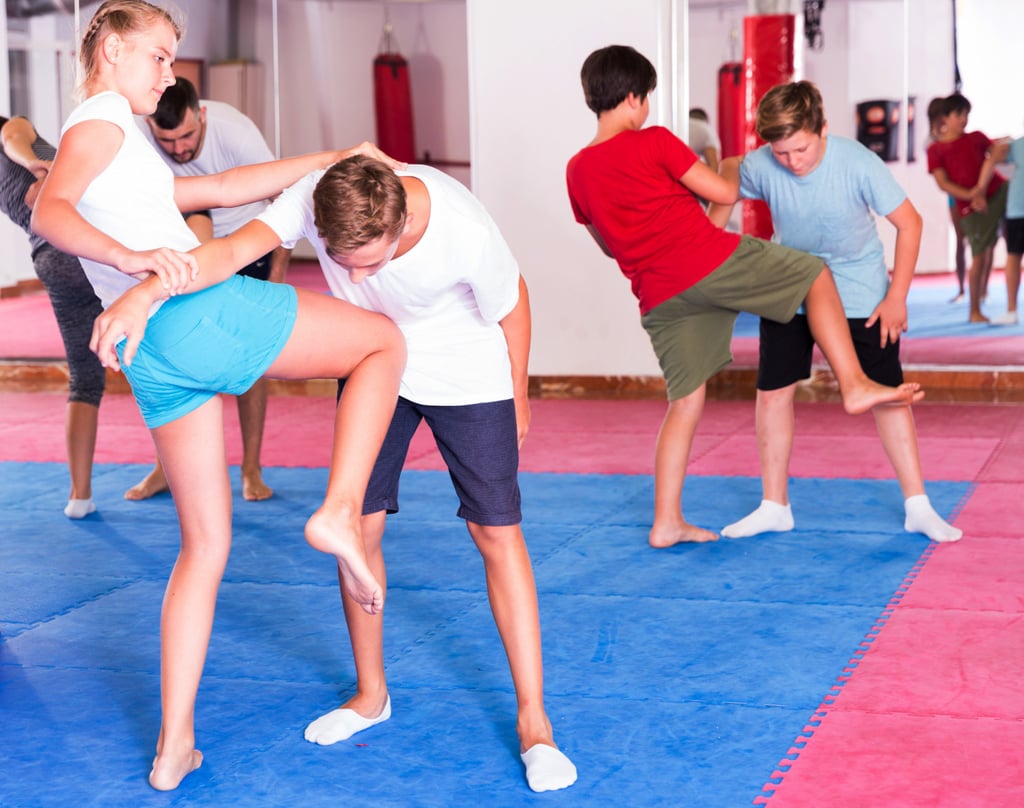
One of the most common mistakes in youth programming is assuming that self-defense for children is simply a simplified version of adult training.
It isn’t.
Children’s nervous systems are still developing. Their coordination, emotional regulation, and cognitive processing are not miniature versions of adults—they are qualitatively different. That means curriculum must be built around developmental readiness, not scaled-down intensity.
When instructors compress adult material into youth formats, dysregulation rises and engagement drops. Not because children are incapable—but because sequencing is misaligned.
Research consistently shows that structured, progressive physical education improves executive function and emotional regulation in children. The key variable isn’t toughness—it’s predictability.
Anxious kids need clarity:
In Pretty Deadly youth formats, body literacy comes first—balance, posture, voice, awareness of space—before introducing more complex partner skills. That layering builds confidence gradually and sustainably.
Youth self-defense done well builds long-term agency. And that begins with curriculum architecture—not improvisation.